Exercise can feel effortless until every landing creates uncomfortable movement. That is where a properly supportive sports bra becomes essential. Why do sports bras need proper support? The answer involves comfort, skin protection, movement control, and confidence. During running, breasts can move in multiple directions, placing stress on delicate supporting tissues. Repeated motion may cause soreness, chafing, or distracting discomfort. A supportive bra helps manage that movement without making breathing feel restricted.
LaJean Lawson, PhD, a respected sports-bra researcher, explains, “The purpose of a sports bra is to control breast motion during exercise.” Her point is practical, not cosmetic. A well-fitted design should match the activity, breast size, body shape, and personal comfort. Encapsulation cups can support each breast separately. Compression styles hold breast tissue closer to the chest. Some athletes need both features. Others may prefer less structure.
Fit remains the difficult part. Straps should stay flat, but they should not dig into the shoulders. The band should feel firm around the ribs. It should not roll, pinch, or restrict deep breathing. A quick movement test helps: stretch, jump, and rotate your arms. Notice pressure points. Notice bounce. Notice whether the fabric becomes damp and abrasive. Small details matter.
Still, no sports bra works perfectly for everyone. That is worth admitting. Body changes, fabric wear, and different exercise intensities can alter support. The best choice is not always the most expensive one. It is the design that remains secure, breathable, and comfortable throughout real movement.
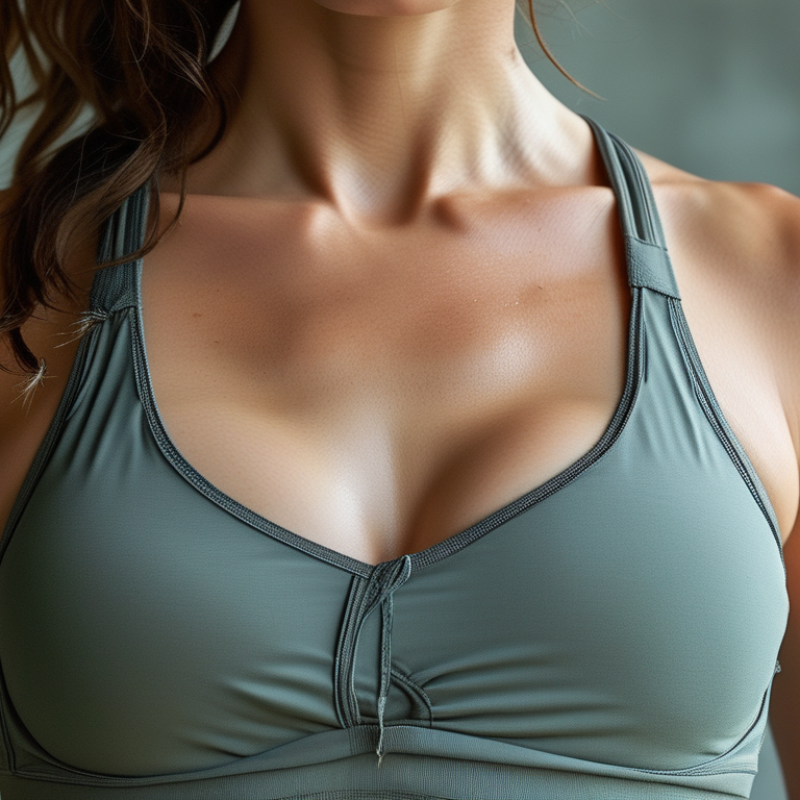
Proper support means controlling breast movement without restricting normal breathing. A well-fitted sports bra should feel secure, not painfully tight. During a fitting, check the band first. It should sit level around your ribs and stay in place when you raise your arms. You should fit two fingers underneath it. More space may indicate weak support.
The fabric should hold the breasts close to the body without creating sharp pressure points. For running or jumping, structured cups and firmer materials usually reduce uncomfortable movement. For yoga or walking, lighter support may allow easier stretching. Wide straps can spread pressure across the shoulders, but they should not dig into the skin. Adjustable straps help accommodate different torso lengths.
Move before deciding. Swing your arms, bend forward, and jog lightly for a few seconds. Watch for shifting, spilling, rubbing, or difficult breathing. I once chose a tighter band because it seemed more supportive. It actually caused soreness after twenty minutes. That experience changed my fitting method. Comfort can be misleading at first. A trained fitter or healthcare professional can help when pain, unusual pressure, or persistent discomfort continues. Even then, personal anatomy matters, and one design will not suit everyone.
During exercise, breast tissue moves in several directions, not only up and down. Running can create repeated bouncing, while jumping adds sudden force. A well-designed sports bra limits this movement by combining firm fabric, shaped cups, and a stable band. It cannot stop motion completely. That is normal.
Less movement can reduce pulling sensations, skin irritation, and breast discomfort. It may also help you maintain a steadier running form when fatigue appears. A snug band should sit level around your ribs without restricting breathing. Cups should hold the whole breast, with no spilling near the neckline or underarm. Straps need firm adjustment, but they should not leave deep red marks.
Fit matters more than appearance.
I have found that many people choose a tighter bra when they actually need better cup coverage. That mistake can create pressure instead of support. High-impact activities usually require stronger compression or encapsulation than walking or gentle cycling. Personal comfort still matters, because breast size, tissue movement, and exercise habits differ widely. Try bending, stretching, and jogging briefly before buying. If pain continues despite a proper fit, a qualified healthcare professional can help identify another cause. A sports bra supports movement control, but it does not replace strength training, medical care, or individual judgment.
How sports bras reduce breast movement during exercise
The chart uses a relative breast-displacement index, with no breast support set at 100. Biomechanical treadmill-running research has reported that effective sports-bra support can reduce breast displacement by approximately 74%, leaving about 26% of the unsupported movement. Reduced movement may help improve comfort, limit tissue strain, and support more efficient exercise.
Data basis: published human biomechanics research comparing breast movement during running with no support and sports-bra support. Values are normalized for comparison.
A well-supportive sports bra can change how exercise feels within minutes. During running, jumping, or quick direction changes, breast movement may cause discomfort and strain. A stable fit helps reduce that movement without making breathing feel restricted. The right support also lets you focus on pace, posture, and technique.
Look for a firm band that sits level around your torso. It should feel secure, but not painfully tight. Adjustable straps can prevent digging near the shoulders. Encapsulated cups support each breast separately, while compression designs hold tissue closer to the chest.
Moisture-wicking fabric may help reduce sweat, friction, and skin irritation during longer sessions. Check the seams, too.
Small details matter.
I once chose a bra by appearance and ignored the rolling band. That mistake became obvious after twenty minutes of cycling. A fitting test helps: raise your arms, bend forward, and imitate your usual movements. If the bra shifts, pinches, or leaves deep marks, reconsider the size or style.
Support needs can also change with activity level, body changes, and washing. Even a well-fitting bra may lose elasticity over time. Some guidance suggests replacing it when the band stretches or recovery feels noticeably weaker. Personal comfort still matters, and no design works perfectly for everyone.
A sports bra should match the movement, not just your cup size. Low-impact yoga and walking often need gentle compression and easy breathing. Running, court sports, and jumping create repeated force, so stronger encapsulation or compression may be appropriate. During a fitting, look for stable straps, a level band, and cups that contain breast tissue without pinching. The right support feels secure. It should not feel restrictive.
Activity and Fit Activity is only one part of the decision. Breast size, tissue movement, shoulder sensitivity, skin irritation, and previous pain also matter. A person with a smaller bust may still need high support for sprinting. Someone with a fuller bust may prefer separate cups for less pressure. Try the bra with the arm movements your sport requires. Jog briefly, reach overhead, and breathe deeply. Watch for slipping, rubbing, or hot spots.
Fit can change after washing, weight changes, pregnancy, or months of heavy use. Elastic loses tension quietly. Replace a bra when the band rides up, hooks feel unusually tight, or support fades. A healthcare professional can help when exercise causes persistent breast, neck, or shoulder pain. I have sometimes chosen a firmer style too quickly; comfort and movement tests corrected that mistake. Support is personal, and the best choice may change across activities.
A sports bra should control movement without restricting normal breathing. When support fails, the warning signs often appear quickly. Breast pain, bouncing, shoulder strain, and chafing are common clues. The band may ride upward during jumps, while the straps dig into your skin. Cups can wrinkle, spill over, or leave gaps near the neckline. These details matter more than a fashionable appearance.
Breast Research Australia has reported that roughly one-third of women experience breast pain during exercise. Its research also links discomfort with reduced exercise participation. A review published in Sports Medicine found that breast support can influence comfort, movement, and exercise confidence. Yet many women still choose size by instinct alone. That approach is unreliable. A correct fit should keep the band level, hold breast tissue securely, and allow two fingers beneath the band. Run, stretch, and lift your arms before buying.
Pay attention to the next workout. If you repeatedly adjust the bra, support is probably insufficient. Persistent pain deserves professional medical advice, especially when it appears outside exercise. Moisture and friction can also expose poor fit through red marks or broken skin. A tighter bra is not always better. Excessive compression may restrict breathing and create new discomfort. Fit advice is not a perfect formula. Breast shape, activity intensity, fabric stretch, and body changes all matter. Recheck the fit after washing, weight changes, or several months of frequent use.
| Observable Sign | What It May Indicate | Potential Effect During Exercise | Simple Fit or Performance Check | Recommended Adjustment | Typical Support Need |
|---|---|---|---|---|---|
| Noticeable breast movement, bouncing, or discomfort | The bra may not sufficiently limit breast movement during repetitive activity. | Discomfort, distraction, and reduced confidence may occur, especially during running or jumping. | Perform several controlled jumps or jog in place. Movement should feel controlled and comfortable. | Choose a design with stronger support, a secure band, and suitable coverage for the activity. | High-impact support |
| The band rides up when the arms are raised | The underbust band may be too loose or the back design may not stay stable. | Support can decrease as the garment shifts, requiring repeated adjustment. | Raise both arms and move through the intended exercise range. The band should remain level around the torso. | Try a firmer band or a different band construction. It should feel secure without restricting breathing. | High to medium |
| Shoulder straps slip repeatedly | Straps may be incorrectly adjusted, poorly positioned, or unable to maintain stable support. | Uneven support, chafing, and frequent interruptions may develop. | Move the arms forward, overhead, and backward. Straps should stay in place without digging into the shoulders. | Adjust the straps evenly or select wider, better-positioned, or racerback-style straps. | Medium to high |
| Chest tissue spills over the neckline, armholes, or lower edge | The cup or overall garment volume may be too small, or the design may not match the wearer’s shape. | Pressure points, restricted movement, and inadequate containment may occur. | Check the front, sides, and lower edge while standing and moving. The tissue should remain comfortably contained. | Try a larger or differently shaped size, or select a style with more coverage and separate cup support. | High-impact support |
| Wrinkling, gaping, or empty space in the cup area | The cup shape or size may not fit the wearer’s breast profile. | Support may be uneven, particularly during multidirectional movement. | Check whether the fabric lies smoothly without folding or leaving unsupported areas. | Try a different cup shape, adjustable style, or a design with removable or structured cups. | Medium to high |
| Rubbing, chafing, or painful pressure points | Seams, elastic, hardware, or moisture may be creating excessive friction or pressure. | Skin irritation can worsen during longer workouts and may discourage regular activity. | Wear the bra for a short movement test and inspect areas under the arms, along the band, and around the straps. | Look for smoother seams, softer edges, moisture-managing fabric, and a more suitable fit. | Activity-dependent |
| Difficulty breathing deeply or moving the rib cage normally | The band or compression level may be excessively tight. | Breathing comfort and exercise performance may be affected even when breast movement is controlled. | Take several deep breaths and rotate the torso. The bra should feel secure but should not cause pain or breathing restriction. | Try a larger band size, a less compressive construction, or a design with more flexible materials. | Proper fit required |
| Support decreases noticeably after washing or repeated use | Elastic recovery, fabric condition, or garment construction may have deteriorated. | The bra may no longer provide consistent support during movement. | Compare the band tension and fabric stability with how the garment felt when new. | Follow care instructions and replace the garment when the band remains stretched or the fabric loses recovery. | Replace when worn |
| Visible moisture buildup with slow drying or persistent dampness | The fabric may not manage sweat effectively for the exercise environment. | Damp fabric can increase friction, discomfort, and the likelihood of skin irritation. | Assess comfort during and after exercise, especially in warm or humid conditions. | Choose breathable, moisture-managing materials and change out of damp clothing after exercise. | Comfort feature |
| Different levels of support are needed for different activities | Activity intensity and movement pattern affect the amount of support required. | A bra suitable for yoga or walking may not provide enough control for running, court sports, or jumping. | Match the bra to the most demanding movement in the planned workout. | Use lower support for low-impact activities and stronger support for repeated, high-impact movement. | Match activity level |
A properly supportive sports bra should control movement, remain stable during exercise, allow comfortable breathing, and avoid painful pressure or skin irritation.
: Firm fabric, shaped cups, and a stable band limit movement in several directions. They cannot stop it completely. That is normal.
Less movement may reduce pulling, breast discomfort, skin irritation, and exercise-related strain. It may also help maintain steadier running form.
The band should sit level around your ribs. It should feel secure without restricting breathing. Two fingers should fit beneath it.
Cups should contain the whole breast without spilling near the neckline or underarm. Wrinkles and empty gaps can also signal poor fit.
No. Excessive tightness may create pressure and restrict breathing. Better cup coverage may provide more support than a smaller size.
Running, jumping, and quick direction changes usually need compression or separate supportive cups. Walking may need less support.
Pain, bouncing, shoulder strain, chafing, upward-riding bands, and frequent adjustments are common warning signs. Deep red marks matter, too.
Raise your arms, bend forward, stretch, and jog briefly. Check whether the bra shifts, pinches, or rolls. Appearance can mislead.
Recheck the fit after washing, body changes, or several months of frequent use. Replace it when the band stretches or feels noticeably weaker.
Persistent pain deserves advice from a qualified healthcare professional, especially if it continues outside exercise. A sports bra cannot explain every cause.
Why do sports bras need proper support? During exercise, breast movement can cause discomfort, skin irritation, and strain on the shoulders, chest, and back. A well-designed sports bra helps limit excessive movement by combining suitable compression, encapsulation, adjustable straps, and a secure band. Proper support should feel stable without restricting breathing or creating painful pressure, allowing you to move with greater confidence and comfort.
The right level of support depends on both the activity and individual body needs. Low-impact activities may require lighter support, while running, jumping, and other high-impact exercises usually call for stronger control and enhanced stability. A supportive sports bra should fit smoothly, keep the breasts comfortably contained, and remain in place during movement. Signs of inadequate support include bouncing, soreness, chafing, slipping straps, a riding-up band, or difficulty exercising comfortably. Choosing the correct size and support level can improve comfort, performance, and overall exercise experience.
