How to Combine Style and Performance in China Top Sportswear

Time:2026-10-17 Author:Amelia
0%

China’s sportswear market is moving beyond simple logos and seasonal colors. Consumers now expect garments that perform during training and remain convincing in daily life. This raises a practical question: How to combine style and performance in sportswear?

The answer begins with evidence, not decoration. A strong product should manage sweat, allow natural movement, and resist repeated washing. It should also fit China’s changing lifestyles, from morning runs in Shanghai to weekend hikes near Chengdu. Designers must study fabric stretch, seam pressure, ventilation, and color durability. Small details matter. A soft collar can prevent irritation. A well-placed pocket can improve a runner’s routine.

Bill Bowerman, Nike’s co-founder and a former track coach, famously said, “If you have a body, you are an athlete.” His words support a broader design principle: performance should serve real people, not only elite competitors. Top Chinese sportswear brands increasingly apply this idea through lighter materials, adaptable silhouettes, and locally informed aesthetics. Their strongest products often look calm on the street but respond quickly during movement.

Still, balance is difficult. A fashionable cut may restrict motion. A highly technical fabric may feel too cold or overly synthetic. Some collections also promise more than testing can prove. That weakness deserves attention. This guide will examine how leading Chinese sportswear brands unite visual identity, material science, comfort, and measurable function. It will also question where design decisions remain incomplete, because better sportswear should improve through honest evaluation.
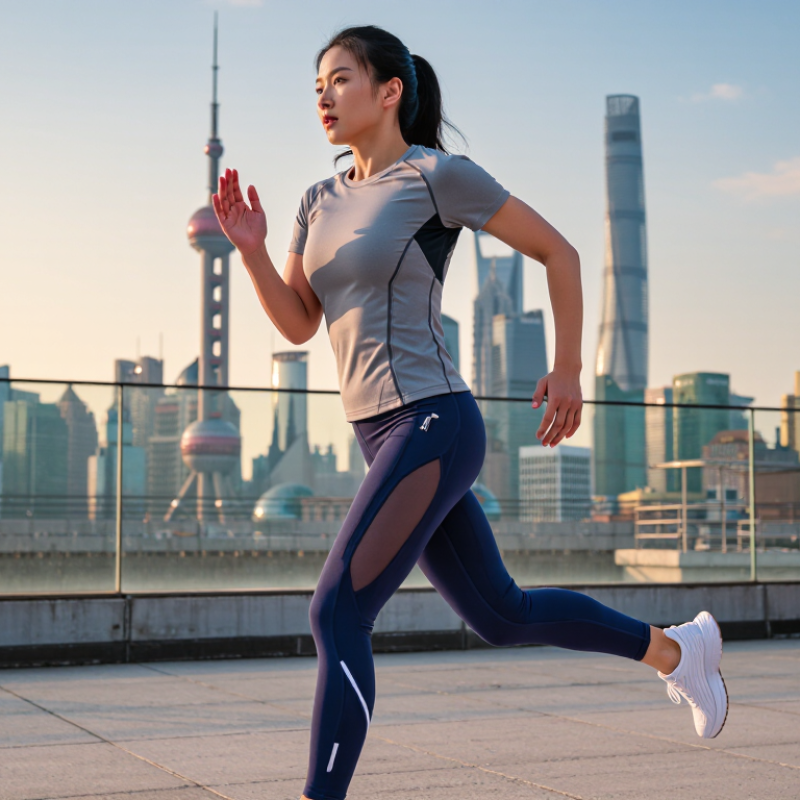
How to Combine Style and Performance in China Top Sportswear

Map China’s Market: RMB 385.8B in 2023 (Euromonitor)

China’s sportswear market reached RMB 385.8 billion in 2023, according to Euromonitor International. That figure changes the design conversation. Demand now spans gym training, commuting, walking, and weekend travel. A jacket may face subway heat at 8 a.m., then sudden rain outside. Performance must survive ordinary life, not only a studio photograph. Small details matter. Breathable panels, secure pockets, and quick-drying fabric can earn repeat wear.

Euromonitor’s market view also shows a broad, competitive category. Growth cannot rely on louder colors or decorative logos. Fit needs local observation. Consumers in colder northern cities may layer fleece under a shell. Humid southern users often prioritize airflow and lightness. These are practical differences, not decorative research. Product teams should test seams, zippers, and fabric recovery after repeated washing. A garment losing shape after six weeks has failed, even if its launch images look polished.

Price remains part of performance. The National Bureau of Statistics reported RMB 13.02 trillion in online retail sales of physical goods in 2023, up 8.3%. This connected shopping environment makes value easy to compare. “Water-resistant” should not imply storm protection. “Lightweight” should still feel durable. Designs can become too technical for daily wear. That is a useful warning. The stronger direction combines restrained styling with measurable comfort, repairable details, and evidence from real movement.

How to Combine Style and Performance in China’s Top Sportswear Market

China’s sportswear market reached RMB 385.8 billion in 2023, highlighting the scale of demand for products that balance athletic performance, everyday comfort, and modern style.

Market value shown in RMB billions. Source: Euromonitor, 2023 China sportswear market estimate.

Select Fibers: Polyester’s 0.4% Moisture Regain Enables Quick-Dry Fits

How to Combine Style and Performance in China Top Sportswear

Select Fibers: Polyester’s 0.4% Moisture Regain Enables Quick-Dry Fits

In China’s humid summers, fabric choice can decide whether a training top feels light or clammy. Polyester has a moisture regain of about 0.4%, far below cotton’s typical 7–8%. It absorbs less water into the fiber, helping sweat spread across the surface and evaporate faster. That matters during outdoor running, indoor cycling, and crowded fitness sessions.

Textile Exchange’s Materials Market Report 2024 states that polyester represented roughly 59% of global fiber production in 2023. The figure shows its manufacturing importance, but scale does not equal quality. A poorly knitted polyester shirt may still trap heat. A dense fabric can feel plastic-like against damp skin. Quick drying also depends on yarn shape, mesh structure, fabric weight, and finishing technology. This is where design judgment matters.

Tips: Choose lightweight, fine-gauge polyester with zoned mesh near the back and underarms. Test drying time after a measured 10-gram water spray, not by touch alone. Check AATCC TM195-style wicking results when suppliers provide them. Recycled polyester can deliver similar moisture behavior, yet it may not solve odor retention. I have found that a cooler fabric is not always a fresher one. More testing is needed.

Engineer Protection: Design UPF 50+ Garments Under GB/T 18830

How to Combine Style and Performance in China Top Sportswear

Designing UPF 50+ sportswear begins with protection, not decoration. Under GB/T 18830, ultraviolet protection depends on measured fabric performance. A fabric that feels dense may still transmit harmful radiation. Testing matters more than appearance.

A practical development process tests the finished garment. Seams, ventilation panels, logos, and stretch zones can change protection levels. Lightweight polyester or nylon fabrics can support quick drying and smooth movement. However, excessive stretching may reduce coverage. We test sleeves during arm movement, not only on a flat table. The neckline also deserves attention. A close, comfortable collar protects exposed skin without creating heat buildup.

Color and structure affect style. Darker shades often improve UV blocking, while mesh panels improve airflow. The balance is difficult. Very tight fabric can feel restrictive during running. Very open fabric may weaken protection. UPF 50+ labeling should follow verified test results under the applicable GB/T 18830 requirements. Records should identify fabric composition, construction, test conditions, and sample details.

Small failures reveal better design decisions. A sleeve may protect well but ride above the wrist. A hood may block sunlight but limit peripheral vision. We revise patterns after real wear trials. Protection must survive movement, sweat, and repeated washing. A polished appearance is useful, but dependable coverage comes first.

Benchmark Leaders: Anta RMB 62.4B vs Li-Ning RMB 27.6B in 2023

China’s sportswear market now rewards products that perform under real pressure. Two domestic benchmark leaders reported RMB 62.4 billion and RMB 27.6 billion in revenue in 2023, according to their published annual reports. The gap shows scale, distribution, and product breadth still matter.

Yet revenue alone does not prove better design. China Sporting Goods Federation data indicates continued growth in fitness participation and sports consumption. Euromonitor’s market research also points toward stronger demand for functional, lifestyle-oriented apparel. In practice, this means a running jacket must manage sweat, resist light rain, and remain comfortable on crowded subway rides. Small details matter: bonded seams, breathable panels, reflective trims, and pockets that hold a phone securely.

Performance needs evidence.

Material claims should be tested, not merely printed on packaging. Laboratory abrasion tests, moisture-management results, and wash-cycle data help buyers judge durability. Retail feedback adds another layer, especially from runners training through humid summers and cold northern winters. However, the industry still leans heavily on sales growth as a success signal. That is incomplete. A high-revenue portfolio may contain products with uneven fit, inflated technical language, or short replacement cycles. Better brands should publish clearer testing methods and admit where performance varies. Style can attract the first purchase; reliable construction earns the second.

Validate Performance: Apply ISO 11092, ISO 6330, and GB/T 3921

Style and performance now compete in the same fitting room. McKinsey’s Sporting Goods 2024 report estimates industry growth of about 5% annually from 2021 to 2025. That growth raises expectations for Chinese sportswear: clean silhouettes must survive sweat, washing, and repeated movement.

ISO 11092 gives a practical starting point. It measures thermal resistance and water-vapour resistance under controlled conditions. A lightweight training top should not only feel smooth. Its fabric must help manage heat and moisture. Test swatches beside finished garments. Seams, prints, and layered panels can change the result. A laboratory score is useful, but it is not a perfect promise.

Wash performance needs equal attention. ISO 6330 defines controlled domestic washing and drying procedures, while GB/T 3921 evaluates colour fastness to soaping. Use the relevant programme, water temperature, detergent, and drying method. Record changes after repeated cycles. Colour loss around a collar is easy to notice. Dimensional change near a waistband is harder, but equally important. Textile Exchange’s Materials Market Report 2024 shows recycled polyester represented 59% of global polyester production in 2023, yet material choice alone cannot prove durability. Testing must connect data with real wear. Our fitting reviews sometimes reveal uncomfortable heat despite strong laboratory results. That gap deserves another test, not a confident slogan.

FAQS

What does UPF 50+ mean for sportswear?

It indicates very high ultraviolet protection from the tested fabric or garment. Testing beats appearance.

Why should the finished garment be tested?

Seams, logos, vents, and stretch zones can change protection after assembly. Flat fabric results may not reflect real wear.

How can stretching affect ultraviolet protection?

Excessive stretching can open the fabric structure and reduce coverage. Test sleeves during arm movement, not only on a table.

What design details improve comfort and protection?

A close collar protects exposed skin without trapping too much heat. Breathable panels can improve airflow, but open mesh may weaken coverage.

Do darker colors always provide better protection?

Darker shades often block more ultraviolet radiation. However, color alone cannot prove UPF 50+ performance.

Which materials suit active sportswear?

Lightweight polyester or nylon can dry quickly and support smooth movement. Their actual performance still requires testing.

What should UPF 50+ records include?

Records should identify composition, construction, test conditions, and sample details. Clear documentation matters.

How should designers evaluate protection during real use?

Try the garment during running, sweating, stretching, and repeated washing. Small failures matter.

What common problems may appear during wear trials?

Sleeves may rise above the wrist, while hoods may restrict side vision. No design is perfect.

Is revenue enough to judge sportswear quality?

No. Sales show market strength, not necessarily fit, durability, or honest technical performance. Performance needs evidence.

Conclusion

China’s sportswear market reached approximately RMB 385.8 billion in 2023, creating strong opportunities for products that balance visual appeal with measurable performance. How to combine style and performance in sportswear? Start by mapping consumer needs and selecting fibers that support comfort, durability, and efficient moisture management. Polyester, with a moisture regain of about 0.4%, can help create quick-drying garments while allowing designers to develop lightweight, structured, and fashionable silhouettes.

Performance should also be engineered into every layer of the product. Designers can develop UPF 50+ garments in line with GB/T 18830, combining sun protection with versatile styling for outdoor activities. Market benchmarking can reveal differences in scale, product positioning, and consumer expectations without relying solely on brand image. Finally, product claims should be validated through recognized testing methods, including ISO 11092 for thermal and moisture-vapor performance, ISO 6330 for washing procedures, and GB/T 3921 for color fastness to washing. This integrated approach helps create sportswear that looks contemporary, performs reliably, and meets practical market expectations.

Amelia

Amelia

Amelia is a seasoned marketing professional with a wealth of expertise in our company’s core offerings. With an unwavering passion for driving growth and innovation, she plays a pivotal role in shaping our marketing strategies and enhancing brand visibility. A key aspect of her responsibilities......